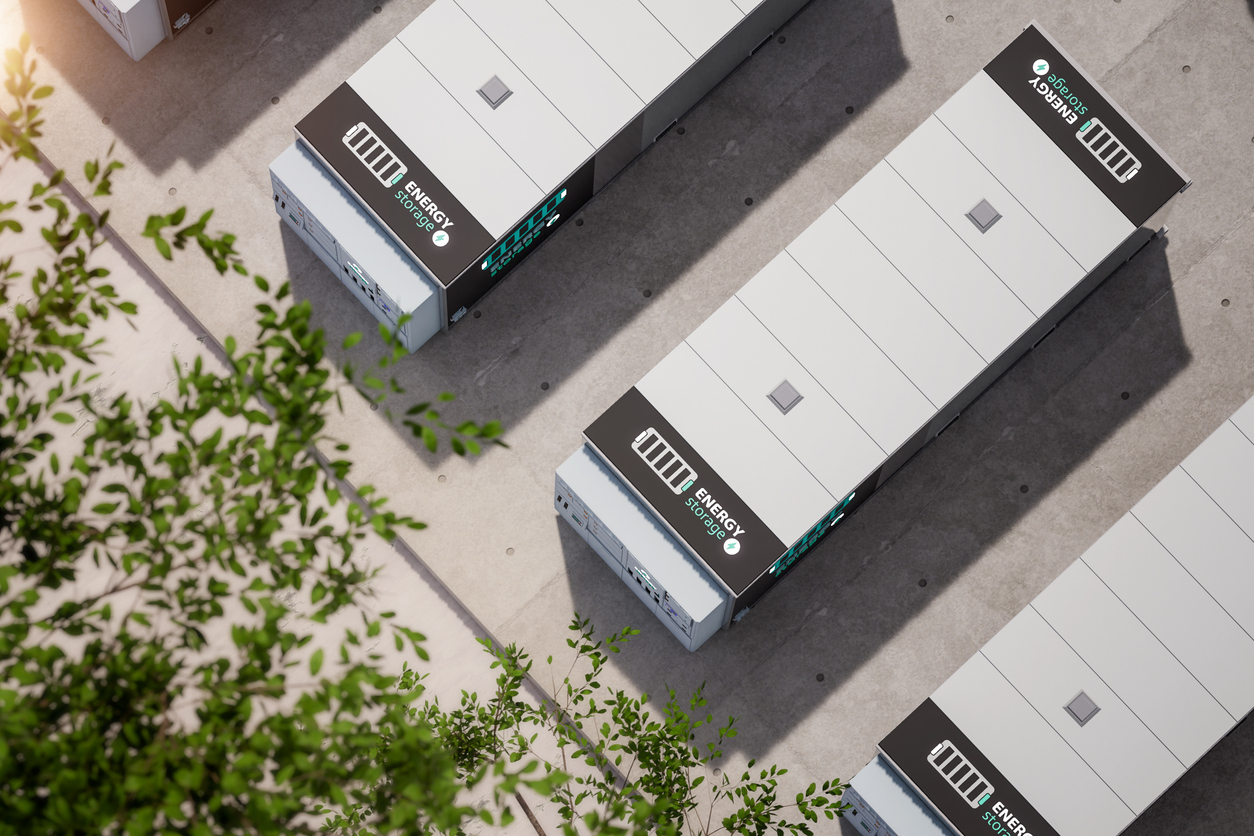
Battery energy storage systems (BESS)
NIRAS helps clients design, specify and deliver large-scale battery energy storage systems (BESS). A BESS can support grid balancing, strengthen security of supply and optimise the use of solar generation.
Electrical energy storage is a mature and rapidly growing technology. It stores energy during periods of low electricity prices and releases it when the market or the grid needs it. The instant response capability of batteries makes them well suited for ancillary services, reserve capacity and backup power during outages.
As demand for balancing services and grid flexibility increases, the requirements for professional, well-designed BESS facilities are also rising. This includes documentation and compliance with grid connection requirements such as Denmark's TF 3.3.1.
What is a BESS?
A BESS is a battery-based energy storage facility that stores electrical energy and delivers it back to the grid, or to a connected installation, on demand. In practice, a BESS typically consists of battery modules, inverters, transformers, switchgear, protection and control systems, plus monitoring and safety functions.
What can a BESS be used for?
A BESS can be deployed in a range of operational and market scenarios. It can contribute to grid balancing, act as reserve capacity and provide backup power during outages. Battery storage can also improve the utilisation of local electricity generation, for example from solar, by shifting energy from periods of high production to periods of higher demand.
NIRAS as your BESS consultancy partner
Working with NIRAS gives you a consultancy partner who understands the technical requirements, regulatory processes and complex grid connections involved in BESS projects. We focus on optimal sizing, safety and documentation, and we can manage the full process from initial studies to testing and commissioning. Our work is delivered across disciplines, with attention to sustainability, environment, landscape and operational reliability.
BESS engineering services
Concept design, budgeting and project management
NIRAS supports environmental screenings, detailed concept development for the facility, engineering design, and risk and progress management. We can also take on health and safety coordination.
Detailed design and specification
We deliver detailed design of the facility's electrical installations, including transformers, switchgear, protection and control. We also design cable routes, foundations, fire protection and monitoring systems, and prepare technical specifications ahead of procurement of battery systems, inverters and auxiliary equipment.
Tendering and supplier management
Preparing tender documents and running the tender process, including technical supplier evaluation and interface coordination across contracts, is one of NIRAS's core competencies.
Construction, site management and supervision
During the construction phase, we can manage the works and provide discipline-specific site supervision, as well as health, safety and environment meetings as required.
Compliance, testing and commissioning
We advise on compliance with technical standards and plan and carry out testing, commissioning and verification of grid connection requirements. We can also conduct snagging inspections and quality assurance.
Why choose NIRAS for your BESS project?
- We provide holistic consultancy across every phase, from initial concept to operation.
- We understand technical requirements, regulatory processes and commercial considerations alike.
- We deliver documentation, design, tendering and supervision to a high professional standard, with a focus on safety and sustainability.
Reach out if you have any questions


See also:


FAQ about BESS
What does BESS stand for?
BESS stands for Battery Energy Storage System. It refers to a battery-based energy storage facility that stores electrical energy and delivers it back to the grid or a connected installation when needed.
What applications can a BESS support?
A BESS can support grid balancing, act as reserve capacity and provide backup power during outages. It can also improve the utilisation of solar generation by shifting energy in time, from periods of high production to periods of higher demand.
What can NIRAS help with on a BESS project?
NIRAS supports the design, specification and delivery of BESS facilities. Services include concept and budgeting, detailed design, technical specifications, tendering, supplier evaluation, site management, supervision, testing and commissioning.
How do you handle grid connection and documentation?
We treat requirements and documentation as an integrated part of the project, including verification of grid connection requirements during testing and commissioning. This ensures the solution is technically robust and well documented.
What does testing and commissioning of a BESS involve?
Testing and commissioning can include planning and executing the relevant tests, plus verification of grid connection requirements. The aim is to confirm that the facility performs as expected and meets all technical requirements.