Project
Participatory approaches building inclusive and climate-resilient communities in Zambia

Farmers lay irrigation drip lines in Sinazongwe District. (Photo credit: Jjumba Martin)
Project
Farmers lay irrigation drip lines in Sinazongwe District. (Photo credit: Jjumba Martin)
Under the Scottish Government Climate Justice Fund, NIRAS has delivered two participatory climate justice projects in Zambia, empowering marginalised communities to advocate for their climate resilience needs and create inclusive, sustainable change.
Zambia faces a stark climate justice challenge. It is among the world’s poorest nations, with roughly 75% of its population relying on subsistence, rainfed agriculture—primarily maize—that is highly vulnerable to climate shocks. In 2024, the country endured its worst drought in over four decades, triggering widespread crop failure and deepening food insecurity. Limited rural infrastructure also creates severe inequalities in access to essential services and support. Against this backdrop, advancing climate justice is essential to safeguarding livelihoods and building resilience among marginalised communities that have contributed little to climate change but bear its heaviest burdens.
Under its Climate Justice Fund, the Scottish Government is funding climate justice interventions across Zambia, Rwanda, and Malawi. Using a participatory approach, the Fund empowers marginalised communities to identify their own climate-related priorities and to co-create solutions that address their unique needs.
At the heart of the Climate Justice Fund is the principle of climate justice, which seeks to address not only the physical impacts of climate change but also the social inequities that magnify its effects. The Fund is guided by three key pillars of justice:
Procedural Justice: Ensuring that project design and decision-making processes are transparent, inclusive, and equitable. This involves actively encouraging the participation of marginalised groups, including women and people with disabilities, to ensure that the communities most affected by climate change have a voice in determining their own future.
Distributive Justice: Providing equal access to resources and opportunities. This pillar focuses on supporting communities in improving their resilience by addressing their most pressing needs—whether it be water, food security, or economic empowerment—ensuring that those most affected receive the benefits they deserve.
Transformative Justice: Tackling the structural inequalities that perpetuate vulnerability. By empowering communities to reshape power dynamics and advocate to their duty bearers for sustainable solutions, CJC seeks to create lasting, systemic change that transcends immediate climate challenges.
As the implementing partner of two Climate Justice Fund projects in Zambia, NIRAS is working to empower marginalised groups—those often left behind by conventional development models—to advocate for climate justice and build long-term resilience against the harsh impacts of a changing climate. A pool of specialised technical service providers and consultants are offering innovative solutions and are working either directly with communities or providing support to Community Delivery Partners to implement the climate resilience-building interventions requested by communities.

The efforts of CJC to mitigate the effects of climate change we are facing in my chiefdom and the district are greatly appreciated. By addressing the pressing issues of climate change, you are helping us protect our livelihoods, secure our food sources, and build a more resilient future for our people.
Her Royal Highness, Chieftainess Sinazongwe
From August 2023 - March 2026, Climate Just Communities (CJC) project operated in four of Zambia’s poorest and most climate-vulnerable districts: Luangwa, Sinazongwe, Sioma, and Shang’ombo. These regions face distinct but interconnected climate challenges, from worsening droughts to intensifying human-wildlife conflict over dwindling water sources. In each of these districts, NIRAS collaborated with national and local partners, including the Evangelical Fellowship of Zambia (EFZ), the Council of Churches in Zambia (CCZ), and the Green Living Movement Zambia (GLM). These local organisations served as key conduits for community engagement, helping to facilitate the inclusion of voices often excluded from decision-making, particularly women, people with disabilities, and other marginalised groups.
In practical terms, CJC’s interventions were tailored to the unique needs of each community. For example, in Luangwa, where drought exacerbates human-wildlife conflict, local delivery partner CCZ worked with residents to develop strategies to manage water resources more effectively. In Sinazongwe, where high temperatures are wreaking havoc on agriculture and livestock, the Green Living Movement introduced climate-resilient farming techniques. Meanwhile, in Sioma and Shang’ombo—some of Zambia’s most remote districts—the EFZ led efforts to enhance food security and water access.
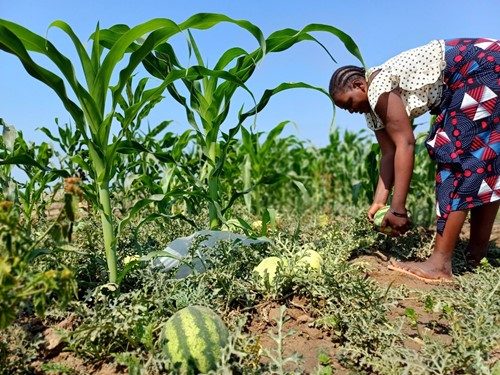
Photo courtesy of CJC Media
CJC interventions were designed using participatory approaches during an in-depth scoping phase in which communities identified pressing climate hazards and developed Climate Justice Plans, outlining their visions for a more climate-resilient future. Project implementation in each ward was overseen by a Community Management Committee, including representatives from marginalised groups and important community structures, such as Ward Development Committees and traditional leaders. Close coordination with local government was key to the delivery model.
Key project numbers:
Across all these districts, the programme promoted climate-resilient agriculture, helping farmers adopt sustainable practices such as water-efficient irrigation and drought-resistant crops. In tandem, CJC supported economic development initiatives aimed at diversifying income sources through small enterprise development, reducing communities' dependence on climate-sensitive livelihoods.
The programme also prioritised disaster risk reduction, working with communities to monitor and respond to climate-related hazards like floods and droughts. By improving early warning systems and building local capacity to manage emergencies, CJC helped reduce the devastating impacts of natural disasters.
Another critical area of focus was water, sanitation, and hygiene (WASH). The project drilled and rehabilitated boreholes, sunk protected wells, and constructed hand-washing facilities and improved latrines to ensure access to clean and safe water, which is often in short supply due to prolonged droughts.
Natural resource management was another key theme, with CJC promoting techniques like reforestation, nursery establishment, and farmer managed natural regeneration to combat deforestation and preserve vital ecosystems. These efforts not only mitigated the impacts of climate change but also supported local livelihoods by providing sustainable sources of timber and food.
Starting April 2026, NIRAS is continuing to work in the same four climate-vulnerable districts of Zambia under a one-year Climate Justice Grant, with the aim of embedding sustainability and scaling inclusive access to climate justice interventions.
Building on the strong foundations of community participation, inclusion, and partnerships with local government and other institutions established under CJC, the project will provide comprehensive enablers for sustainable food production through drought-tolerant crop training and seed system pilots, livestock management support, and the expansion of irrigation systems. The project will also support farmers to improve incomes by facilitating market access for selected climate-resilient products and providing coaching to community Market Facilitators.
Recognising the high demand for consistent water access for household and productive use in rural Zambia, the project will prioritise development and sustainable management of water resources, including the construction of shallow wells and weirs, rehabilitation of non-functional boreholes, improving water quality, and building the capacity of communities to maintain and govern their water infrastructure in the long term.
The project will continue to improve the ecosystem services on which the interventions above depend through increasing vegetative cover (e.g. tree planting) and supporting economically viable tree nurseries. The disaster risk reduction committees established during CJC will be mentored and connected to local government structures to ensure communities can respond to local disasters and are supported to mitigate human-wildlife conflict.
The approach aims to strengthen public accountability and community access to rights and government services. Through facilitated dialogues and Advocacy Champion training, the project will amplify community voices to influence transparent and inclusive climate policies and financing, namely through Government of Zambia (GRZ’s) Constituency Development Fund (CDF).
The project takes a twin-track approach, mainstreaming Gender Equality, Disability, and Social Inclusion (GEDSI) across all interventions and delivering targeted activities for marginalised groups to enhance access to services and independent living.
You can follow the Climate Justice Fund Zumbia Project on:
Implementing Partners:
Climate Just Communities: Green Living Movement Zambia, Evangelical Fellowship of Zambia, Council of Churches in Zambia, Civil Society for Poverty Reduction, Disability Right Watch, CBM UK.
Climate Justice Grant: Green Living Movement Zambia, Evangelical Fellowship of Zambia, Civil Society for Poverty Reduction, Disability Right Watch, CBM UK, Empowered Communities Helping Others (ECHO), Renavatio Business Consultants, Community Markets for Conservation (COMACO), Exotic Green Power, Organic Farm 7.

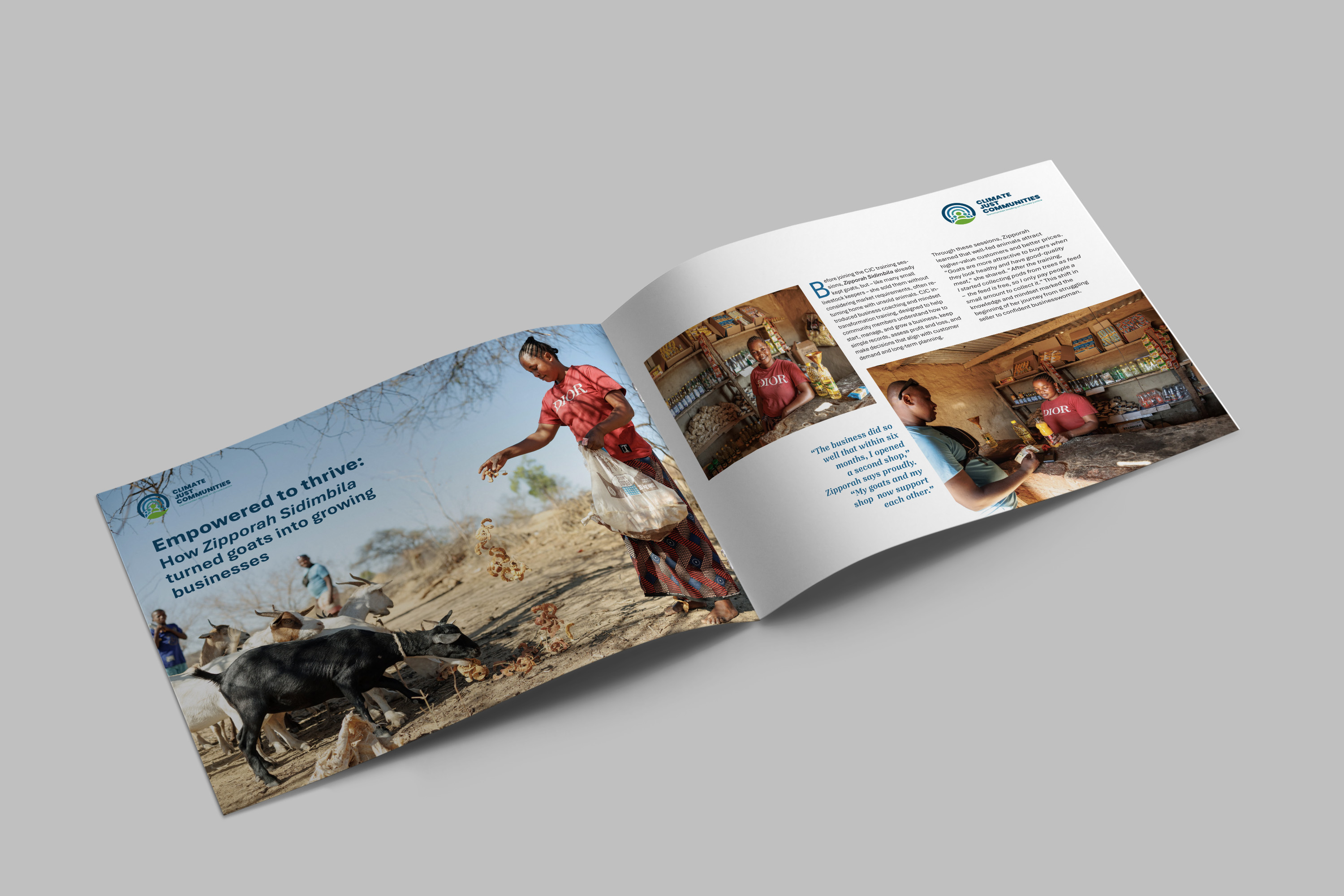
Endline Evaluation Report
Climate Justice in Practice: Learnings from the CJC Programme in Malawi, Rwanda and Zambia
How a Disability Inclusive Approach to Climate Adaptation Helps Move from Tokenism to Transformation
Institutionalising Participatory Climate Justice through Community Management Committees in Zambia