Project
Boosting job opportunities for refugees and host communities in Ethiopia

Project
In a region marked by conflict, climate shocks, and displacement, access to decent work can mean the difference between long-term dependency and self-reliance. For refugees and internally displaced people (IDPs) in Ethiopia, employment is not only a source of income but a pathway to dignity, stability, and social inclusion.
As one of the first signatories to the 1951 Geneva Refugee Convention, Ethiopia’s open-door policy for refugees has made the country a haven in an area plagued by strife and disaster.
Today, more than 1.1 million refugees live in the country, mostly fleeing from South Sudan and Somalia. Meanwhile, 3.7 million Ethiopians are considered IDPs as a result of conflict, climate change, and displacement due to rapid development.
With growing consensus around local integration as a sustainable response to forced displacement, supporting refugees and IDPs to access skills provides them with a fresh start and helps maximise possible economic benefits. In Ethiopia, that means improving employment prospects among refugees lacking the necessary skills for in-demand jobs while host communities also feel the crunch for opportunities.
Tackling this by focussing on qualifications and employment perspectives (QEP) has long been an initiative of the German Federal Ministry for Economic Cooperation and Development (BMZ), implemented by German Corporation for International Cooperation (GIZ GmbH), with the aim of better linking technical and vocational education and training (TVET) with labour market needs.
NIRAS supports GIZ within the QEP initiative by assisting to expand access to market-relevant training, strengthening institutional capacity, and building partnerships with the private sector.
Approach to trainings
NIRAS supported GIZ, specifically in interventions in Addis Ababa and Gambella (alongside the Norwegian Agency for Development Cooperation), in the sectors of metalwork, construction, agriculture, hospitality, and electronics. Earlier activities included the Tigray region but were hampered by heightened political conflict in the area.
Access to TVET programmes had been limited by strict entry requirements, training costs, language barriers, restricted mobility, and the non-recognition of qualifications obtained outside Ethiopia. To address this, the QEP project introduced short, industry-driven courses designed to enable rapid entry into employment.
After identifying key topics with support from the regional TVET agency and other government and education stakeholders, the team developed courses in cooperation with three educational institutions already offering programmes for refugees – namely the Nefas Silk Polytechnic College and Akaki Polytechnic College in Addis Ababa, and the Openo Polytechnic College in Gambella.
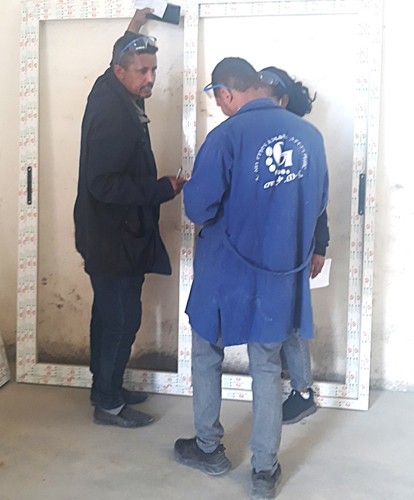
Another key priority is ensuring the quality of TVET training being offered, which was achieved through tighter coordination with private companies to inform curricula that are practical for learners and contribute directly to their employment prospects. The QEP team also built the colleges’ capacity to maintain continuous professional development among trainers and faculty, as well as foster a more collaborative relationship with local industries. By strengthening links between colleges and companies, learners gain practical skills that translate directly into employment or self-employment.
To this end, the programme ensured that the colleges’ partner companies and cooperatives offer the best prospects for the employment of both refugees and locals. The team assisted in providing industry engagement strategies and facilitated roundtable discussions to narrow communication gaps and to encourage local industries to jump on board. Within the colleges, QEP instituted internal mentorship mechanisms and suggested additional investments in personnel and infrastructure to job placement offices, recognising its role in connecting learners to employment.
The programme also created structural interventions to build employment pathways, such as identifying and partnering with companies, which identified growing needs for skilled workers. In the colleges’ job placement offices, courses were taught on researching job market information and providing vocational guidance and counselling. Despite the limitations imposed by COVID-19 and regional armed conflicts, QEP’s first phase was completed in 2023.
Entrepreneurship support
QEP also promotes self-employment as a viable livelihood pathway. In Addis Ababa, the initiative collaborated with government officials under the Accelerated Employment Creation Initiative (AECI), which provides support across the full business cycle—from registration and incubation to counselling, access to finance, and marketing. Coordination with TVET colleges and job-creation agencies ensures that graduates interested in entrepreneurship receive targeted assistance to establish and grow small businesses.
Heightening conflicts in neighbouring countries and the lingering effects of the pandemic have slowed efforts to implement and realise interventions aimed at improving employment prospects for refugees. The number of IDPs also grew as a result of violence in northern Ethiopia. Thus, GIZ saw the necessity of a second phase to increase the TVET system’s capacity for these burgeoning challenges.
Firstly, QEP II aims to fortify policies and introduce mechanisms that truly embed refugees and IDPs into the labour market. Primarily, the project established a mechanism between the Refugees and Returnees Service (RRS) and the Ministry of Labour and Skills (MoLS) – formally known as the Technical Coordination Platform (TCP) – where vocational training and employment measures can be jointly planned, managed, and monitored. Through the TCP, it is hoped that all efforts and levels of government are aligned, making interventions more effective.
In addition to establishing the TCP, NIRAS supported the conduct of a Capacity Needs Assessment across institutions involved in refugee labour market integration. The joint efforts of the NIRAS and GIZ teams under the QEP II project aim to address the identified gaps through targeted capacity‑building measures.
As the second phase rolls on, it also plans to build upon the achievements and lessons of the preceding phase by increasing access to TVET training in selected areas of the Somali region. These trainings should focus on industries with high employment potential, particularly on environment- and climate-related sectors. It will also work on improving job prospects for women refugees and IDPs in two areas of the said region, advancing inclusive, climate-responsive, and sustainable employment for those most in need.