News
DNA reveals hidden patterns in Denmark’s coastal biodiversity

News
A major Aarhus University study has used environmental DNA to map marine life along the Danish coastline, revealing surprisingly consistent patterns from microorganisms to algae and animals. The research also shows how eDNA could provide a more comprehensive picture of coastal biodiversity in the future.
What determines species richness in coastal waters? And can the same environmental factors determine the composition of marine organisms as different as bacteria, algae, mussels and fish?
Researchers from Aarhus University and collaborating institutions have investigated these questions in one of the most comprehensive studies of Danish coastal biodiversity to date. The study is based on analyses of environmental DNA, or eDNA, collected along Denmark’s coastline.
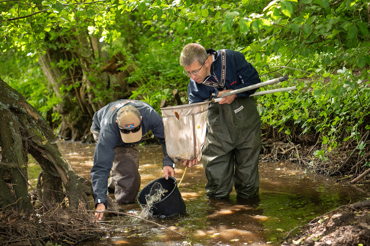
The researchers analysed almost 1,000 water and sediment samples from locations spanning from the North Sea to the Baltic Sea (Figure 1). Samples were collected from sandy bottoms, rocky piers, and eelgrass meadows. Using eDNA metabarcoding, the researchers could detect a much broader range of organisms than is possible with traditional methods.
"Our study represents a major baseline dataset that I think will be valuable also in the long-term management of marine biodiversity. But for me the results were also a very clear reminder that we have so much yet to discover about our marine life."
Philip Francis Thomsen, Professor, Aarhus University
Professor and senior author on the study from Aarhus University, Philip Francis Thomsen:
“The motivation behind this study was to investigate the factors determining marine biodiversity patterns across organisms, but also to address the fact that we have limited knowledge about life in our coastal waters. We show that very different evolutionary lineages follow similar patterns but also detect DNA from species not seen in Denmark previously. Our study represents a major baseline dataset that I think will be valuable also in the long-term management of marine biodiversity. But for me the results were also a very clear reminder that we have so much yet to discover about our marine life.”
One result stands out: salinity was the strongest predictor of the composition and richness of biological communities. Despite the large differences between the organisms studied, salinity consistently helped explain biodiversity patterns along the Danish coastline. Habitat was another important factor.
Rocky habitats stood out as biodiversity hotspots, showing high richness and containing the greatest number of unique DNA sequences. The finding suggests that protecting and restoring rocky marine habitats could benefit a far wider range of organisms than the fish, seaweeds and other larger organisms that are normally monitored.
The researchers also detected DNA corresponding to 90 marine species not previously recorded in Denmark. These are potential new national records rather than confirmed discoveries, as confirmation requires physical specimens. But eDNA can help researchers identify where to look for previously undocumented species.
The study demonstrates the potential of eDNA to complement traditional methods for monitoring coastal nature. Instead of focusing on a limited number of species, the method can provide information about a much broader spectrum of life using only samples of water and sediment.
Such information is valuable both for fundamental biodiversity science and for monitoring and managing coastal environments in practice. Coastal environments are highly important for biodiversity and society but remain understudied despite growing threats to the ecosystems. In this context, eDNA can provide much-needed data to help protect and restore coastal nature.
NIRAS was not involved in the Aarhus University study but has close links to researchers involved in the work.
First author Eva Egelyng Sigsgaard joined NIRAS in autumn 2026 after working at Aarhus University.
“We started working on the project in 2018, so it has been quite a journey, and many people have contributed along the way. But the results are really interesting, and we hope that our approach and data can be used to inform future efforts to monitor and manage coastal ecosystems in Denmark”, she says.
"The results are really interesting, and we hope that our approach and data can be used to inform future efforts to monitor and manage coastal ecosystems in Denmark."
Eva Egelyng Sigsgaard, advisor, NIRAS
"This new study clearly demonstrates the strength of eDNA as a tool for assessing biodiversity in general, rather than merely detecting the presence of specific species."
Martin Hesselsøe, market director, NIRAS
Sune Agersnap was a PhD student on the project and played a central role in the field and laboratory work. He subsequently worked at NIRAS for two years, including on eDNA studies with Martin Hesselsøe. Agersnap, who now works as a senior marine biologist at the Ocean Institute, is a co-author of the study.
Martin Hesselsøe, market director for nature and biodiversity at NIRAS, puts the research project into NIRAS’s perspective:
“At NIRAS, we have been working on the application and development of eDNA tools since 2018. Our focus is on practical applications that support our clients, for example in environmental impact assessments. This new study clearly demonstrates the strength of eDNA as a tool for assessing biodiversity in general, rather than merely detecting the presence of specific species.”
The study was published in Proceedings of the Royal Society B in September 2026: Consistent drivers of coastal biodiversity across the tree of life