Insight

Making scarce public climate finance go further: lessons from small islands

Pexels Matt Barnard 21952098 15692504
Kirsty Wilson

Kirsty Wilson

Vice President - NIRAS International Consulting (UK and Africa)

For small islands and UK Overseas Territories, good resilience ideas do not automatically become investable projects. Drawing on more than two decades of NIRAS and LTS International experience working with small islands and UK Overseas Territories, Kirsty Wilson, Vice President of NIRAS International Consulting in the UK, considers what that experience tells us about making scarce public climate finance go further. Ahead of the UK–Overseas Territories Joint Ministerial Council, she argues for better project preparation, smarter financing choices and stronger local capability.

November 3, 2026

On Jost Van Dyke in the British Virgin Islands, restoring a degraded mangrove wetland could help protect nearby homes from flooding. But a good resilience idea isn’t the same as an investment-ready project. A modest Darwin Plus Local grant helped bridge that gap, enabling the territory’s Recovery and Development Agency to assess feasibility, consult residents and divide restoration into fundable phases, giving it a much clearer path to financing. This is the kind of early stage support that Darwin Plus, administered by NIRAS on behalf of Defra, is designed to provide.

Pexels Vika Glitter 392079 35841124

According to the Climate Policy Initiative, Small Island Developing States (SIDS) received just over US$2 billion annually in international public adaptation finance in 2021-2022, against estimated annual needs of US$12 billion. Some 44% of this finance came as debt. More funding is needed, but so too are viable routes from initial concepts to investment. For SIDS and UK Overseas Territories, small domestic markets and modest project sizes can make it difficult to demonstrate bankability and attract private investors, particularly when preparation and transaction costs are high relative to the investment. Overseas Territories face an additional complication: their non-sovereign status can restrict access to international climate funds, making the strategic use of scarce public money to address investment barriers all the more important. 

Set the destination before choosing the route  

Start with what is needed to meet local demand, strengthen essential services and support resilient growth—not with a predetermined financing instrument, coupon or investment model. Build the investment case from those needs, then establish how much capital is required, what revenues can realistically support repayments and returns, and where scarce public funding can help make private investment viable. Early-stage grants and technical assistance can help governments assess investment needs, test financial viability and identify the right mix of public, private and concessional finance to deliver local priorities.

Pexels Tholaal Mohamed 44739834 7903868

NIRAS’ work on coastal resilience priorities and financing needs in the Maldives illustrates this needs-first approach. Detailed analysis of five islands’ vulnerability to flooding and erosion helped establish their different needs and challenges, informing the development of tailored investment concepts spanning coastal protection, island reclamation and port infrastructure. In this way, the investment was shaped by local needs and conditions, providing a sound basis for defining the investment required and, ultimately, how best to finance it. 

Navigate the financial mix to make public money go further 

A solar project with predictable revenue, a water utility upgrade and mangrove restoration have different financial prospects. Ask first: what blocks investment, who can manage the risk and what is the simplest fix? 

The answer may be early project-preparation funding, private capital where revenues are reliable, concessional finance or guarantees where specific risks block investment, or grants for adaptation that brings public benefits without commercial returns. Public money should remove a real barrier, not simply chase a headline leverage ratio. 

NIRAS’ evaluation of the EU-funded PacWaste Plus programme across 15 Pacific countries illustrates the importance of credible revenues in attracting investment and sustaining services. The wider lesson for small-island investments is to consider the capital stack alongside the operating model: where grants are needed to establish enabling conditions, what ongoing revenues can support, and whether repayable private capital is feasible. 

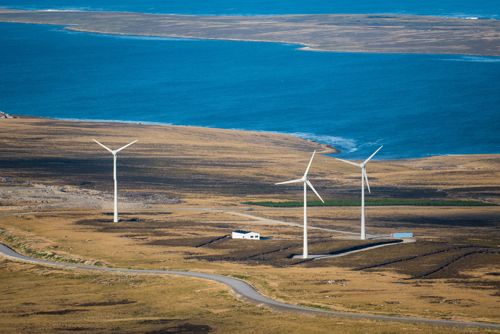
In the Falkland Islands, one of Defra’s Darwin Plus Local projects brings government, conservation specialists and landowners together to test affordable ways to restore degraded land. This illustrates a practical role for public grants to establish the evidence and capability needed, while assessing landowners’ capacity and the additional investment required to scale up regenerative practices. 

Bring smaller projects together for the journey  

Small investments carry disproportionate legal, feasibility and transaction costs. Several islands pursuing solar and battery systems, resilient water supplies or energy-efficient public buildings could share technical specifications, studies or procurement arrangements, reducing preparation costs and creating a more consistent pipeline of projects. Where appropriate, projects can be presented to financiers as a portfolio, creating a more attractive investment proposition 

World Bank research identifies standardisation and financial intermediaries as ways to overcome the high transaction costs facing smaller projects. The opportunity is to standardise where it creates efficiencies or economies of scale, while keeping individual investments tailored to local needs and locally owned. 

Pexels Brandon Morrison 119560 6053556

Identify the routes open to each territory  

Sovereign SIDS and non-sovereign UK Overseas Territories (UKOTs) can face similar climate risks but different funding rules. Constitutional and eligibility arrangements can restrict access to international climate funds. Access is not uniform across territories or financing mechanisms. 

A useful finance map should therefore be territory-specific: which grants, UK public resources, development banks, philanthropic partners, utilities or commercial financiers can participate, under what conditions, and with what borrowing and legal constraints?


Testing funder appetite early can prevent scarce preparation resources being spent on inaccessible finance routes. NIRAS provided climate action technical assistance to the Caribbean Development Bank, to develop climate-risk and vulnerability assessment guidance, strengthen institutional processes and build capacity of borrowing member countries to develop climate-resilient projects and access to the bank's $65m Climate Action Line of Credit. The credit line supported investments in renewable energy, resilient water and transport, and coastal protection, including across five Caribbean UK Overseas Territories such as Anguilla, the British Virgin Islands, Cayman Islands, Montserrat and Turks and Caicos Islands. 

Build capability that lasts beyond the next storm 

Capacity is measured by whether government teams and utilities can assess options, prepare investments, manage contracts and maintain assets when advisers have left. That means working alongside local officials, gradually handing over responsibilities, and leaving practical tools, relationships and accountable systems behind. It also means asking who gains from more reliable water or energy, and who might be left behind.

Istock 1140159333

Building capability also means planning for what happens financially when the next hurricane hits. Maintenance budgets, insurance, emergency liquidity, appropriate risk-sharing and disaster-resilient design belong in the investment plan, not as afterthoughts. The UK’s 2026–2030 SIDS Strategy similarly reinforces the importance of access, capacity and disaster-risk finance. 

In St Helena, Darwin Plus has helped the St. Helena Government, Connect Saint Helena (the islands utility company), the Centre for Ecology and Hydrology, Artcium and the UK Met Office to monitor sub-catchment water balances, develop a drought early warning network and develop nature-based solutions for a more secure water supply.  

The UK’s evolving partnership with the Overseas Territories creates an opportunity to think differently about climate finance: not simply how much public funding is available, but how it can be used most effectively to strengthen local capability, prepare viable investments and address the risks that prevent private capital from participating. As the UK and Overseas Territories take forward the new Charter for Engagement, the Joint Ministerial Council provides a timely opportunity to turn those principles into practical investment pathways. From our experience, three priorities stand out: 

  1. Prepare fewer projects better: Turn locally identified priorities into credible, investment-ready proposals.  

  1. Match finance to the problem: Use public and private capital according to real risks, returns and financing constraints.  

  1. Build resilience that lasts: Invest in local institutions and the ability to deliver, manage and sustain projects. 

For more information on climate finance, contact:

Kirsty Wilson

Kirsty Wilson

Vice President - NIRAS International Consulting (UK and Africa)

Edinburgh, United Kingdom

+44 131 440 5500

Callum Donaldson-Murdoch

Callum Donaldson-Murdoch

Market Team Lead for Climate and Infrastructure – UK and Africa

Edinburgh, United Kingdom

+44 131 440 5500

For more information on Darwin Plus, contact:

Andy East

Andy East

Communications and Capability & Capacity Building Lead - Biodiversity Challenge Funds

Edinburgh, United Kingdom

+44 131 440 5500

William Leonard

William Leonard

Principal Consultant

Edinburgh, United Kingdom

+44 131 440 5500